
Construction Site Cleanup & Sweeping in Austin, TX
and the Central Texas Region
Trackout control, sediment removal, magnetic nail sweeping, and general construction site cleaning for job sites across Austin and the surrounding areas, documented to satisfy the strictest watershed rules in Texas.
At a glance
Building fast, on sensitive ground
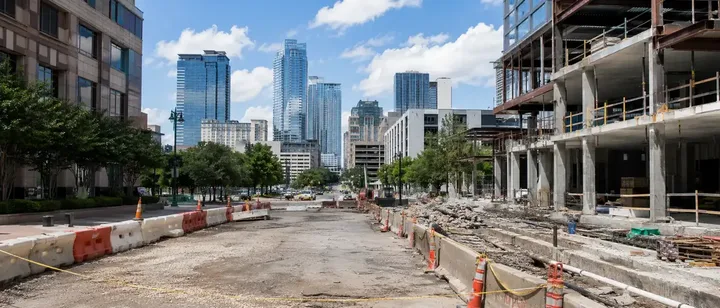
Austin is among the most active construction markets in the country, and among the most closely regulated for watershed protection. Moore Clean’s construction site services keep job sites and haul routes clean across the region: subdivision phases spreading through Williamson County along SH-130, tech and industrial construction north of US-183, mixed-use infill down the I-35 corridor, and Hill Country projects west of MoPac where creek buffers and recharge features sit close to the fence line.
Construction site cleaning across Austin is needed at the start of a build and again at the end. Pre-construction cleanup opens the job: the pad and access roads are cleared before mobilization, and brush, demolition material, and limestone fines on staging areas are swept and hauled away so equipment moves in over clean ground. Post-construction cleanup closes it out. Haul routes and curb lines are swept, nails and tie wire are lifted from the pavement, flatwork is washed free of mud and residue, and the street at the entrance is cleaned before the owner walks the site.
The Austin area continues to rank with the national leaders in new construction activity measured by the U.S. Census Bureau Building Permits Survey. Every permit represents a future job site, and every job site brings track-out that has to be controlled at the gate.

Our routes
Job sites in Austin and the Central Texas region kept inspection-ready
What’s included
What our construction site sweeping and cleanup covers
- Gate & entrance sediment removal
- Trackout & haul-route sweeping
- Sweeps timed to inspections & concrete pours
- Nails & metal debris lifted by magnet bar
- Visit records prepared for the SWPPP binder
- Paving & milling cleanup
- Standing service for multi-phase builds
- Final cleanup before turnover
Caliche and Hill Country limestone produce a fine dust that requires dust-suppressed equipment, which is the purpose of our TYMCO DST-4 dustless sweeper. Magnet bars remove nails and tie wire from haul routes before a tire finds them, and a final pressure wash at close-out leaves the flatwork ready for turnover.
All of this is exterior work. It includes construction sweeping, trackout control, and debris clean-up across pavement, haul routes, and gate approaches. Interior post-construction janitorial cleaning belongs to a different trade, and we can recommend a provider when a project needs that service.
Why it matters
What does SWPPP compliance require in Austin and the Central Texas region?
The framework starts federal and state, with the EPA’s NPDES construction stormwater program and the TCEQ general permit (TXR150000), and gets stricter locally. Austin’s watershed ordinances layer creek buffers, impervious-cover limits, and recharge-zone water quality standards on top, and city inspectors check whether sediment is actually staying on site, not whether the silt fence looked good in March.
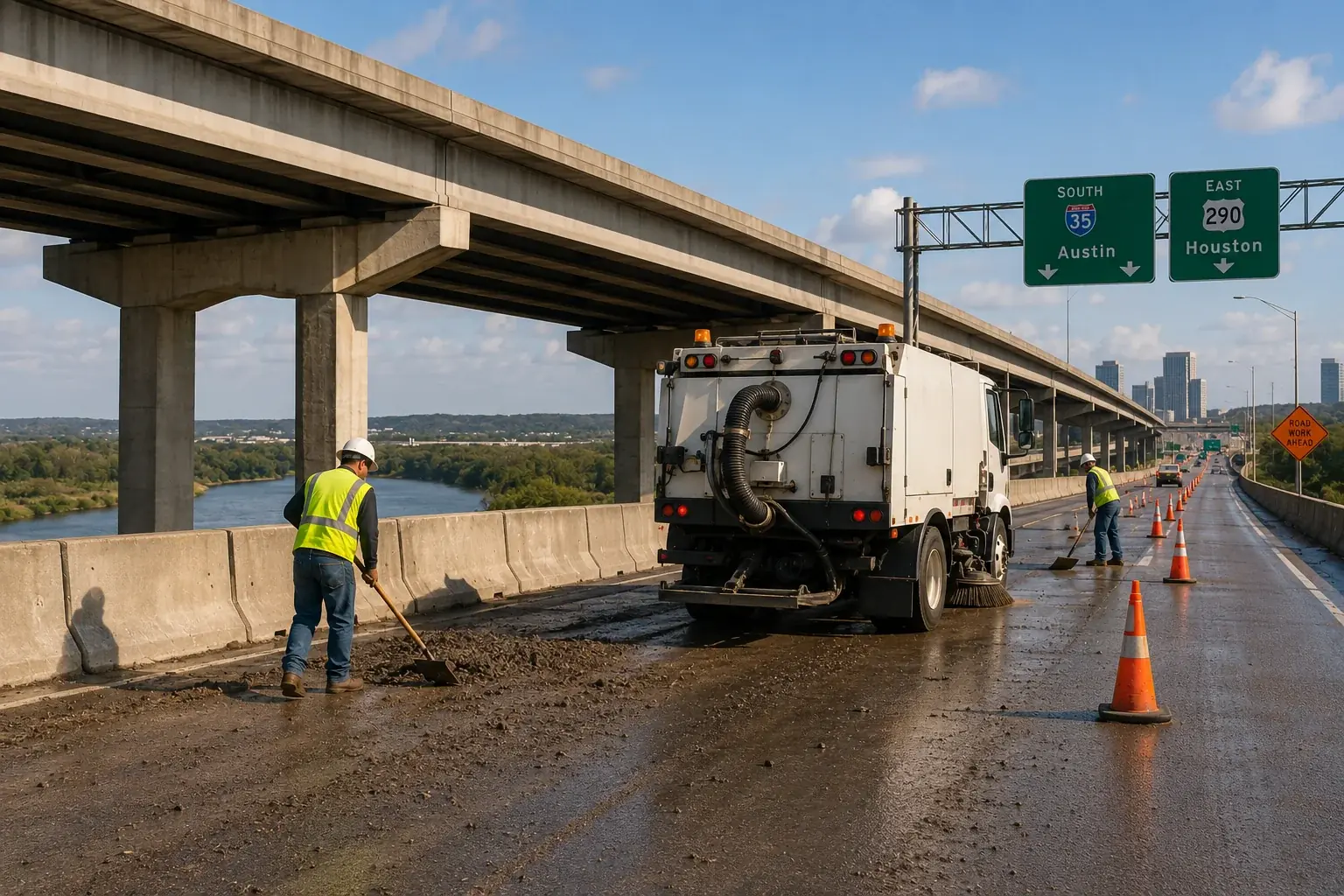
Trackout on the street is the first thing everyone sees, including neighbors, inspectors, the developer’s lender on a site visit. Our guide to what construction trackout is and how Texas sites control it covers the permit language and the sweeping cadence by phase. Scheduled sweeping keeps the gate and haul routes controlled and produces dated records for the binder: active sediment control, proven, visit after visit.
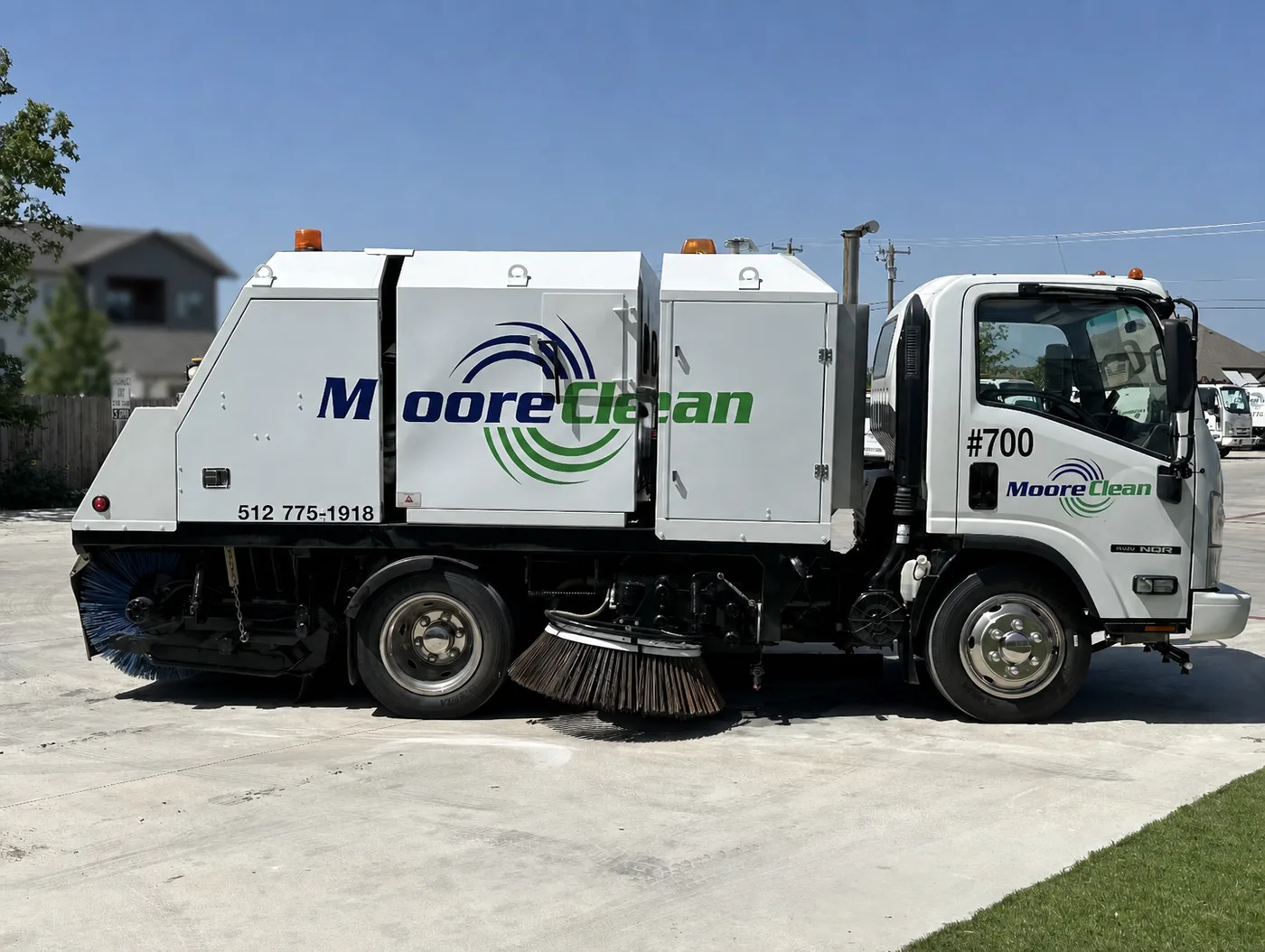
Construction Cleanup Power SweepingStreet sweepers remove nails, small debris, and limestone dust from the site and its approaches.
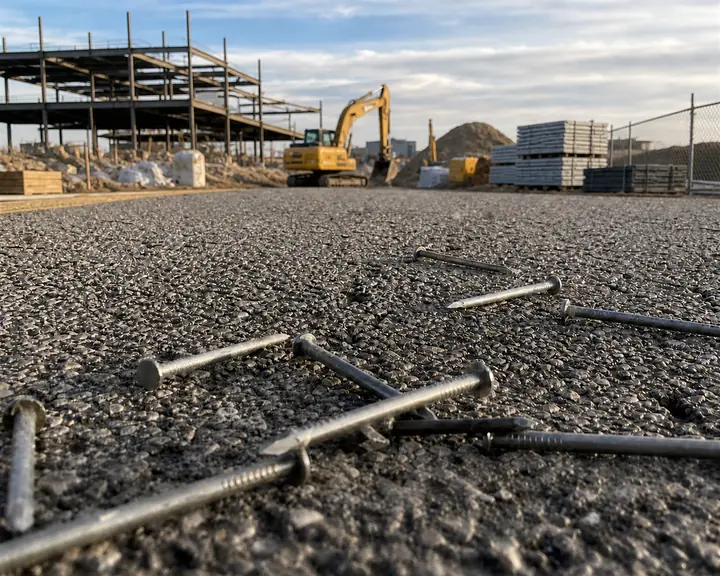
Magnetic Nail PickupOn every pass, magnets lift the nails, screws, and metal that site traffic leaves on the pavement.

Debris RemovalPiles are loaded and hauled away with documentation, and the site keeps moving.
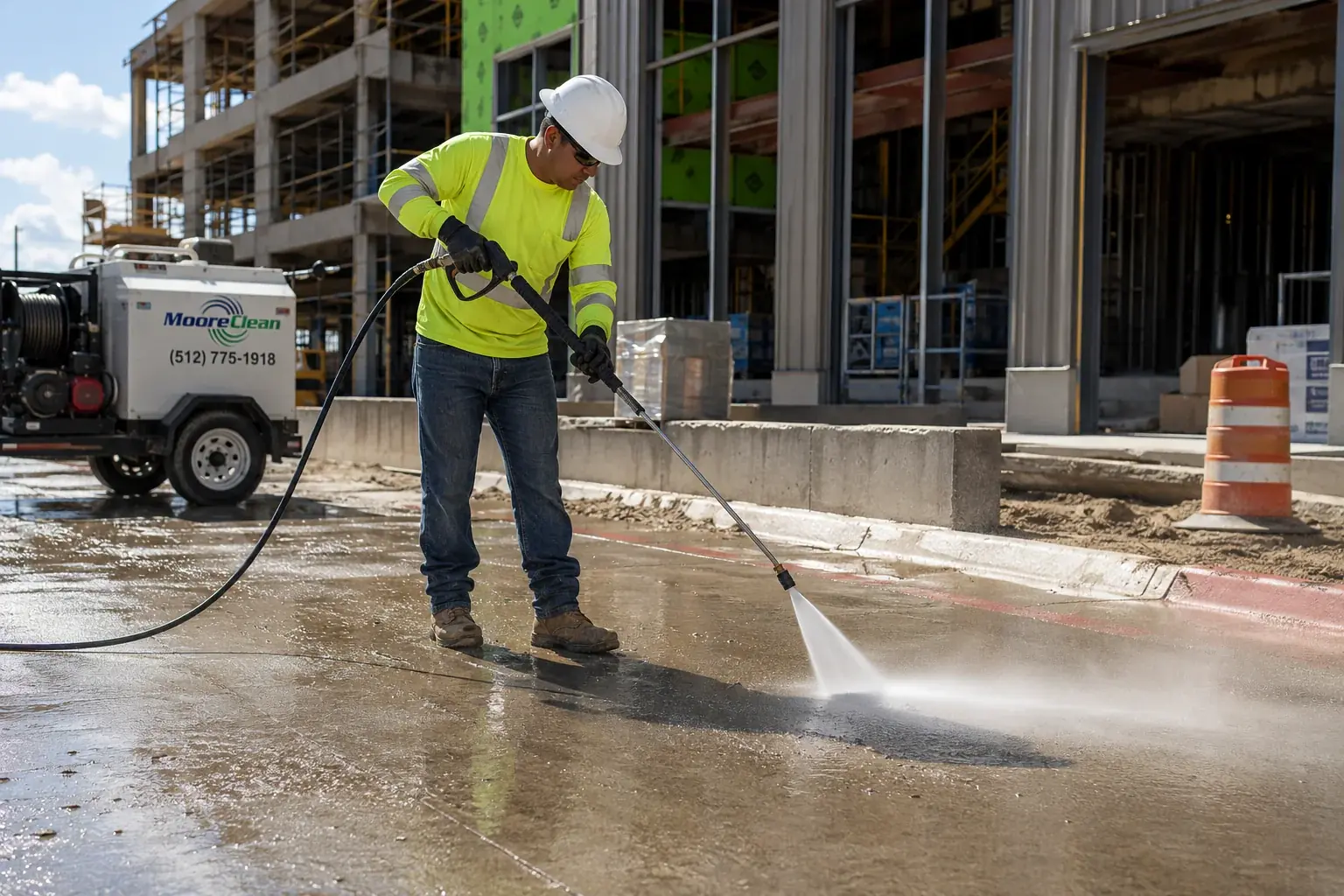
Power WashingCaked mud and residue are pressure washed from pads and walkways with the runoff recovered.
Documentation
Sweep records ready for inspections
Where we work
Construction site sweeping across Austin and the Central Texas region

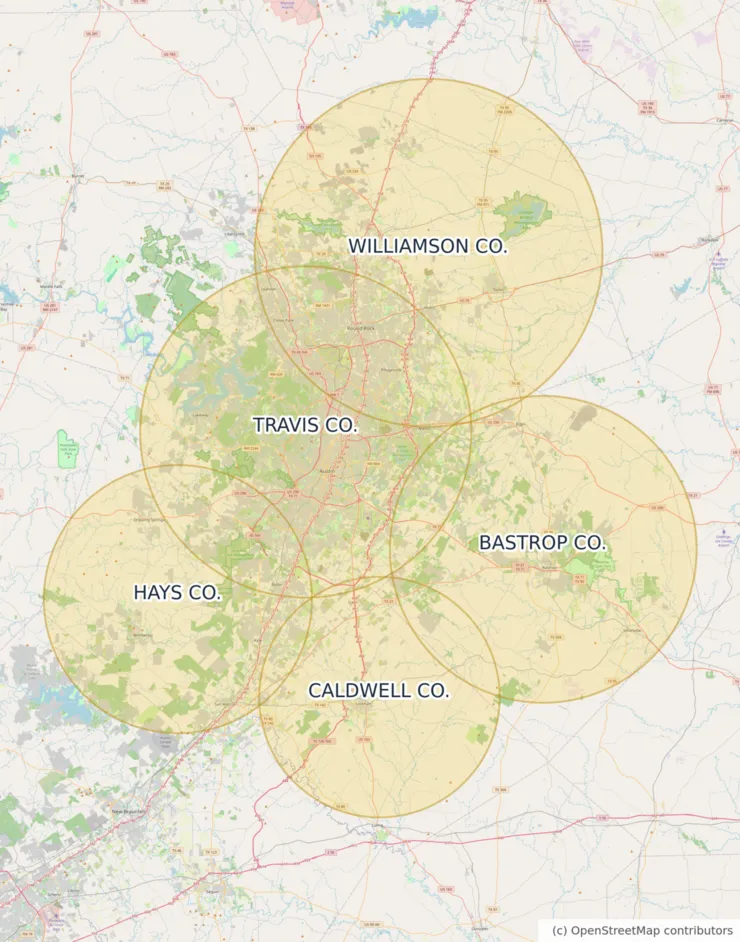
Our Round Rock facility on CR 110 puts us minutes from the region’s heaviest construction zones, including Round Rock, Hutto, Georgetown, and Pflugerville phases, SH-130 corridor industrial, Downtown and East Austin infill, and campus work along MoPac and US-183, plus job sites running south through Buda and Kyle into Hays County. Weekly service on active phases, pre-inspection sweeps on short notice, and full final cleanup at turnover.
Service Areas | Warehouse Location
6801 CR 110, Round Rock, TX 78665
(512) 775-1918 · 24/7 Service available
Get started
Get a construction cleanup quote for your site in Austin and the Central Texas region
Give us the site address and phase, and we’ll scope recurring or milestone sweeps for your Austin project.
Get More Information
Select a service and fill out form
"*" indicates required fields
Questions
Austin construction cleanup FAQ
Do you work sites in or near the Edwards Aquifer recharge zone?
Yes, and it’s where documented cleanup earns its keep. Water-quality standards over the recharge zone are the strictest in the region, and sediment leaving a site there draws attention fast. We schedule tighter cadences for recharge-zone sites and document every visit so your controls are provable.
Can you keep pace with fast subdivision phases?
Yes, much of our Williamson County work is exactly that. The cadence follows the phases: heavier through dirt work and utilities, lighter at trim-out, with a quick pre-inspection sweep when the city or the lender schedules a visit.
Is magnetic nail sweeping included?
Yes. Every construction sweep includes a magnet pass over haul routes, gates, and laydown yards to pick up nails, screws, and tie wire. It saves tires and keeps the paving schedule on track, and it fits the construction housekeeping standard, 29 CFR 1926.25 that OSHA sets for clearing scrap from work areas.
What documentation do you provide?
Each visit produces a dated record of what was swept, where, and what was hauled, sized for the SWPPP binder. It supports your trackout and sediment controls under the TXR150000 permit. Austin Watershed Protection reviews construction closely, more so near the Edwards Aquifer recharge zone, so we keep the records specific.
Is this construction sweeping or post-construction cleaning?
Construction sweeping. Our work is outside: haul roads, gates, staging pavement, curb lines, and the street at your entrance, plus magnet passes and SWPPP records. Interior post-construction cleaning, such as dusting, windows, and floors, is a different trade and not something we offer.
Parking Lot Sweeping · Street Sweeping · Pressure Washing · Airport Sweeping · Garage Sweeping
Porter Service · Window Cleaning · Graffiti Removal · Hauling Debris · Exterior Handyman · Bundled Services