How Do Street Sweepers Work? Broom, Air, and Vacuum Explained
Every street sweeper solves the same problem, get debris off pavement and into a hopper, but the three major technologies do it in very different ways. This guide explains how mechanical broom, regenerative air, and vacuum sweepers actually work, what each is strongest at, and how to match the machine to the pavement in front of you.
Three ways to get debris off pavement
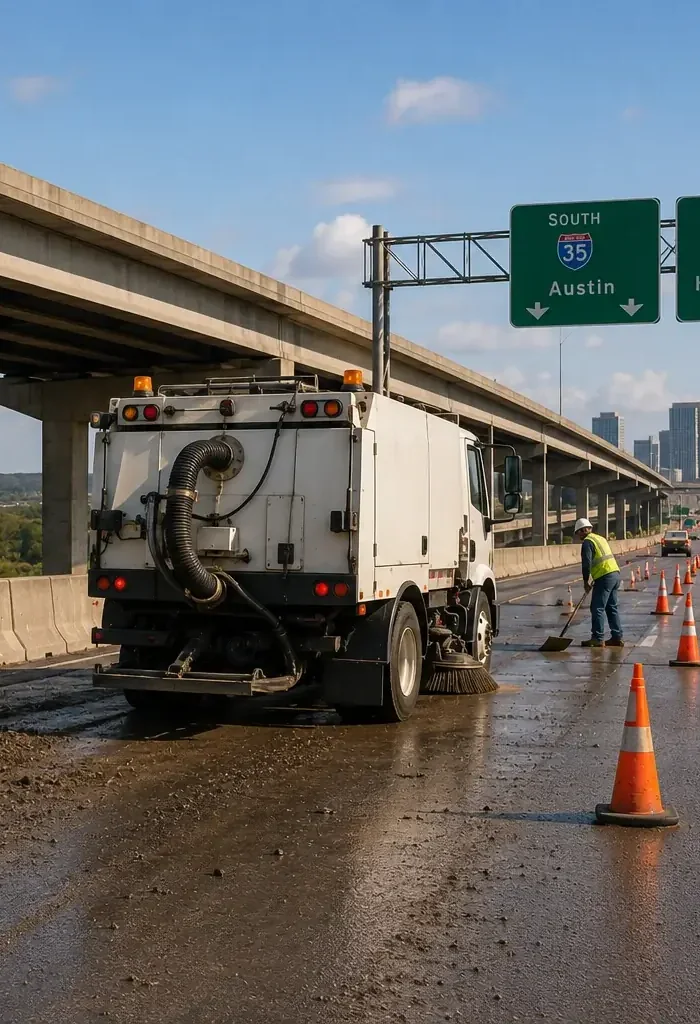
Every sweeper on the road descends from one of three ideas: brush it up, blow it loose and catch it, or suck it up. Manufacturers refine the details, but the mechanism underneath determines what a machine picks up well, what it leaves behind, and where it makes sense to run. Knowing the difference is the fastest way to understand why a contractor brings one truck to a construction exit and a different one to a retail lot. (For the exit itself, see our guide to construction trackout.)
Mechanical broom sweepers
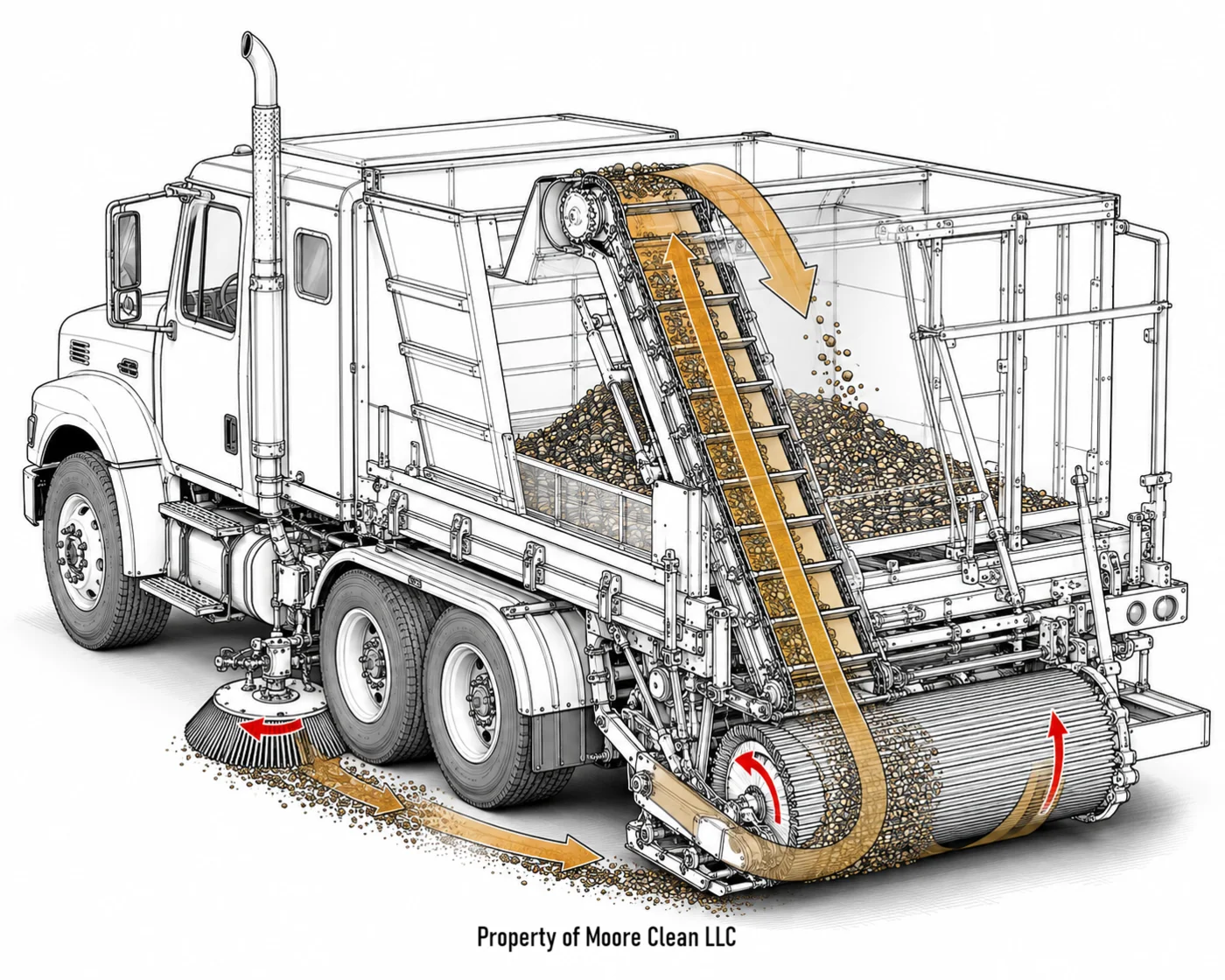
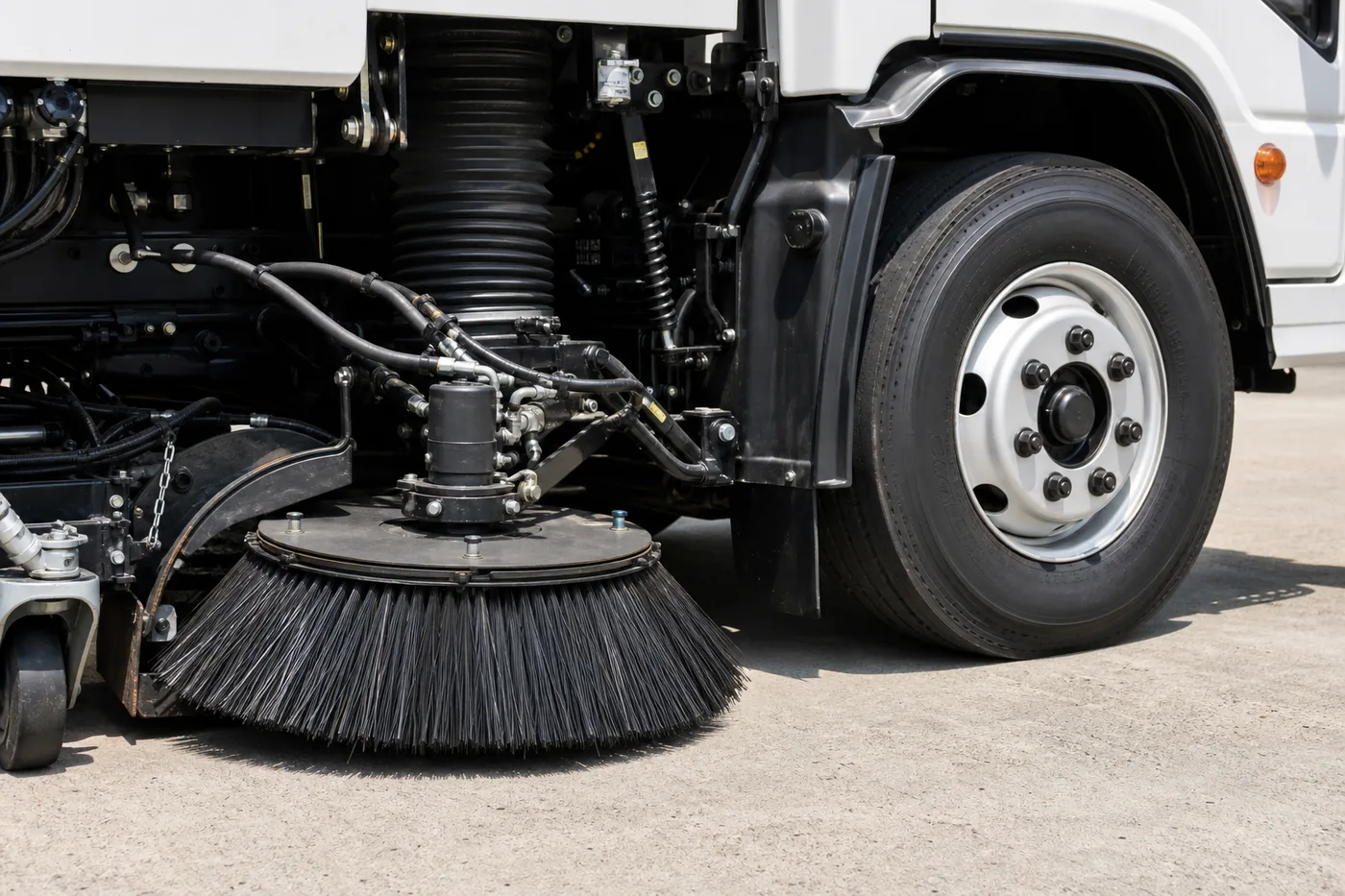
The oldest design, and still the standard for heavy debris. A large cylindrical main broom spins against the direction of travel and flicks material onto a conveyor or elevator belt, which carries it up into the hopper. Gutter brooms at the curb line pull debris into the main broom’s path.
Broom machines shine where the load is heavy, wet, or caked: construction mud, gravel, millings after a road project, storm debris. They are the workhorses of municipal contracts and dirt-heavy sites. That work can fall to our Schwarze M6 Avalanche class broom trucks, with the machine matched to the site.
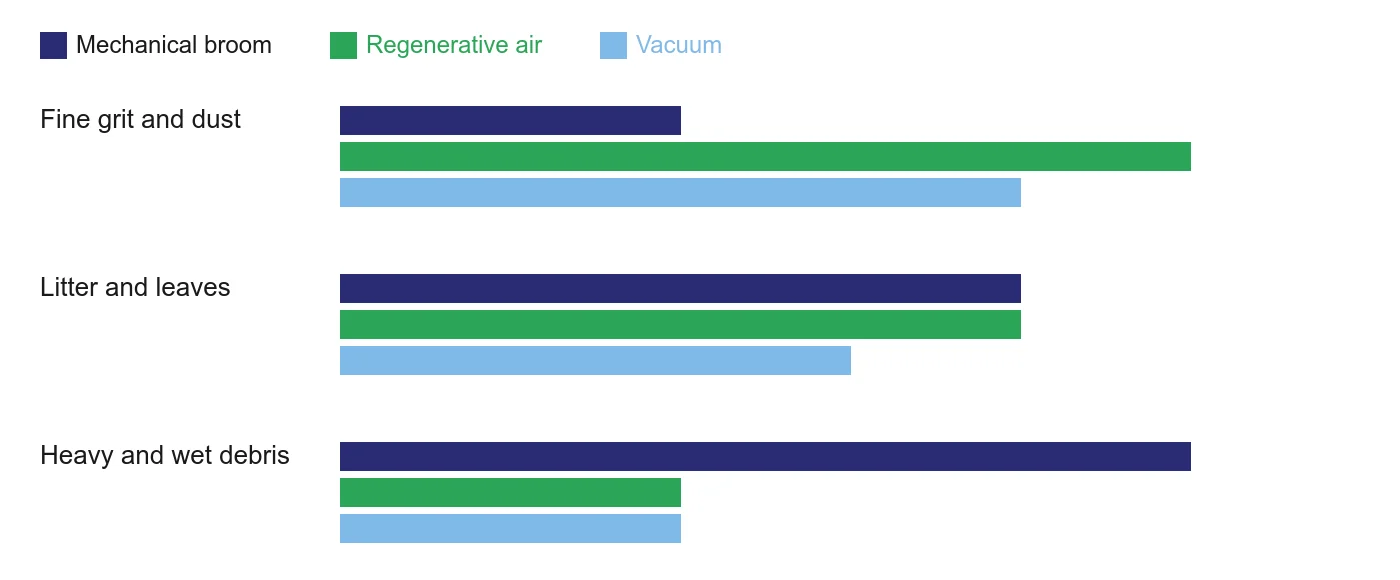
The tradeoff is the fine material. Brooms flick, and flicking leaves fines in the pavement texture and can raise dust that has to be knocked down with water spray. More brush contact also means more wear parts.
Regenerative air sweepers
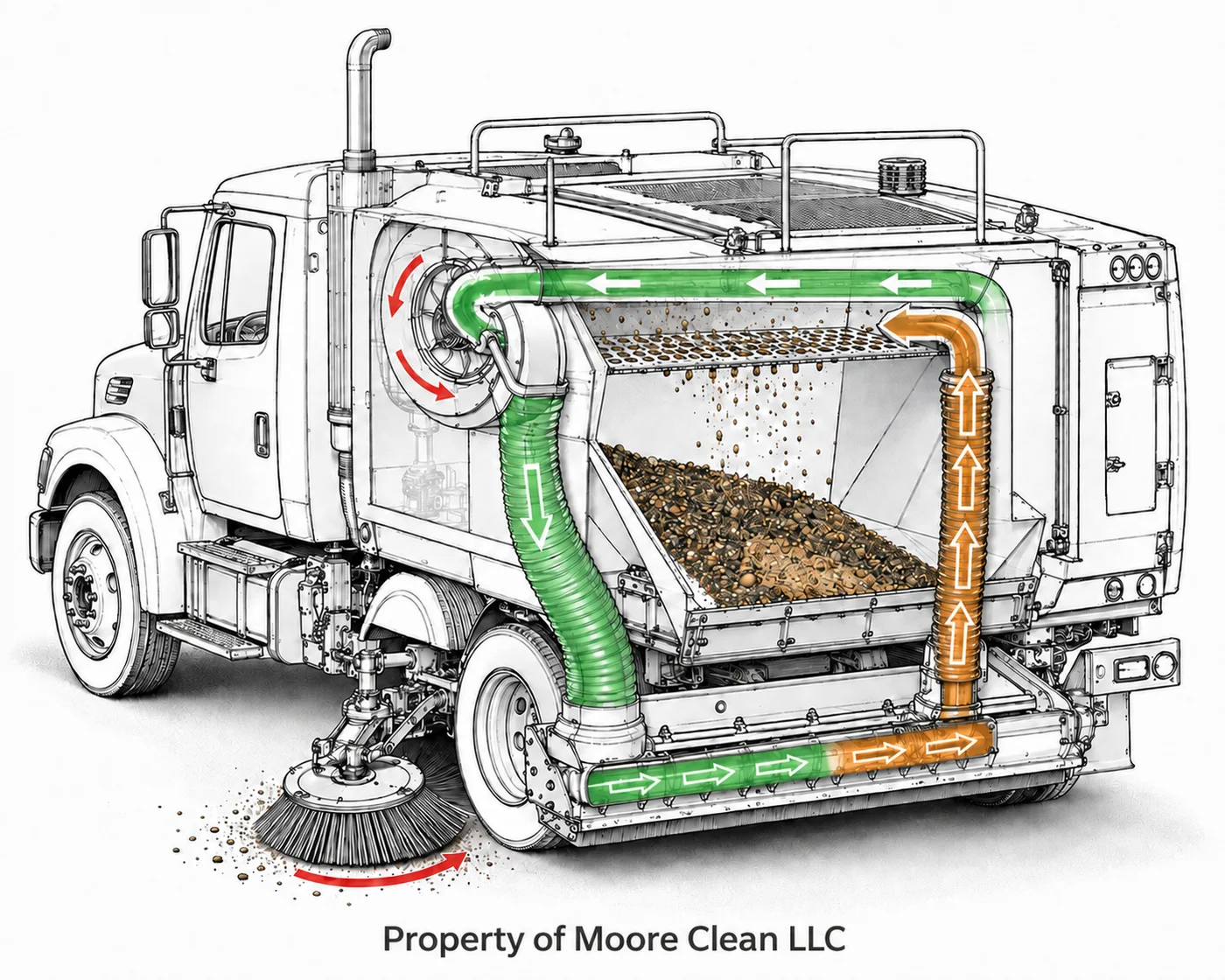
A regenerative air machine is a closed air loop on wheels. A blower pushes air down through one side of a full width pick-up head, the blast scours the pavement, and the same air is pulled back up the other side carrying the debris with it. Heavy material drops into the hopper, the air is cleaned and sent back down again. TYMCO’s explanation of the regenerative air system is the reference description of the cycle.
Because the blast and suction span the whole head, these machines excel at fine sediment, the sand, silt, and dust that carries most of the pollutant load pavement sheds toward storm drains. The recirculated air also gives them strong dust control, which is why they dominate routine street and commercial work, and why the FAA’s FOD program guidance contemplates the class for cleaning airport pavement.
What they like least is the heavy, wet, packed material a broom machine handles easily. On most commercial routes that mix rarely appears; after a storm or next to active dirt work, it does.
Match the machine to the material
- Construction mud, gravel, millings: mechanical broom.
- Routine lots, streets, fine grit: regenerative air.
- Enclosed garages and tight corners: compact and vacuum equipment.
- Airport ramps and FOD control: regenerative air.
- After a storm: broom first where debris is heavy, air behind it for the fines.
Fleets mix technologies for exactly this reason: the strengths do not overlap, and the site decides which strength matters.
Pure vacuum sweepers
Vacuum machines put all their energy into suction. A fan pulls a hard vacuum on a nozzle, usually narrower than a regenerative air head, and debris rides the airstream straight into the hopper, with the air filtered before it leaves the machine.
Concentrating the suction in a narrow band gives vacuum equipment real pulling power, which suits enclosed decks, tight corners, and heavy fine loads in a small area. Coverage is slower across open acreage, which is why pure vacuum machines appear more in garages and specialty work than on long open routes.
| Technology | How it moves debris | Strongest at | Watch for |
|---|---|---|---|
| Mechanical broom | Spinning broom flicks debris onto a conveyor into the hopper | Heavy, wet, caked material, construction debris | Leaves fines behind, dust needs water spray |
| Regenerative air | Closed air loop scours the pavement and carries debris back to the hopper | Fine sediment across full lane widths, dust control | Heavy wet piles, badly broken pavement |
| Pure vacuum | High suction nozzle lifts debris directly into the hopper | Concentrated fines, enclosed and tight spaces | Slower coverage on open pavement |
Why the choice matters beyond the pavement
The sediment a sweeper recovers is the same material regulators care about. The EPA lists pavement sweeping on its national menu of stormwater best management practices because fine sediment binds metals, oils, and nutrients on its way to the storm drain. Picking up the fines, not just the visible litter, is what turns a sweeping route into a stormwater control, a case Schwarze makes in detail and TYMCO’s industry overview echoes.
Grit is also what grinds pavement down. The Federal Highway Administration’s pavement preservation program treats routine debris removal as part of extending surface life, and the logic is the same in a parking lot as on an interstate: keep the abrasive material off the wear surface.
What Moore Clean runs, and why
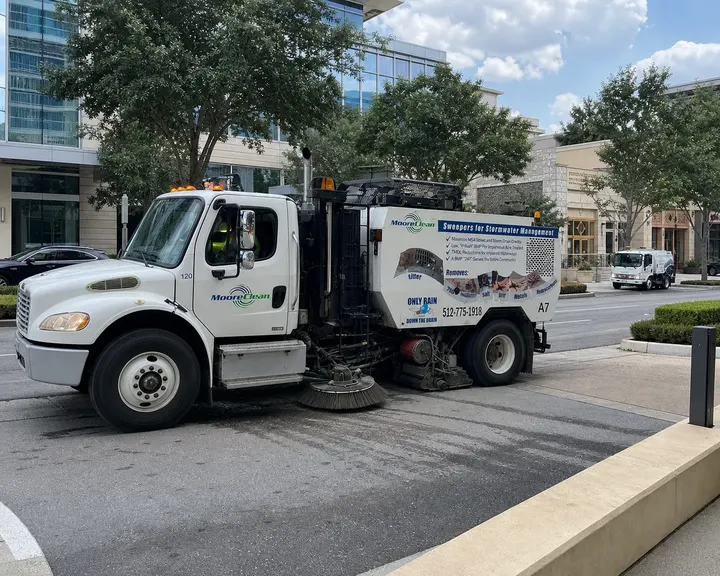
Our routes run regenerative air machines, Schwarze A7 Tornado and A4 Storm class, with compact units for garages and tight geometry, because commercial pavement sheds mostly fine debris and that is the load these machines remove best. We provide street sweeping in Austin, San Antonio, Houston, and Dallas. Request a quote and tell us what your pavement collects; the right machine follows from that.
Frequently asked questions
Which sweeper type is best for parking lots?
For routine commercial lots, regenerative air is the usual answer: full width pickup, strong dust control, and it recovers the fine grit that shortens seal coat life. Lots recovering from construction or storm debris often get a broom pass first.
Why do airports use regenerative air sweepers?
Foreign object debris is mostly small and hard: hardware, spalled concrete, grit. A full width air system lifts that material out of pavement texture without flicking it across the ramp, and the closed loop keeps dust down near operations. FAA guidance on FOD management programs contemplates the class for pavement cleaning.
Do sweepers raise dust?
Broom machines can, which is why they run water spray. Regenerative air machines recirculate their airstream, so most of what they lift stays inside the loop, and vacuum machines filter their exhaust. On well maintained modern equipment, a visible dust cloud behind a sweeper usually means something needs attention.
Can one machine handle every property?
Not well. The technologies trade coverage against pulling power against heavy debris handling, which is why contractors run mixed fleets and match the truck to the site rather than forcing one machine to do everything.
| Source | Content |
|---|---|
| TYMCO | Regenerative air system. How the closed air loop works. |
| TYMCO | Why you should sweep. The case for routine sweeping. |
| Schwarze Industries | The environmental power of street sweeping. Sweeping as an environmental control. |
| Environmental Protection Agency | EPA stormwater BMP menu. Sweeping as a stormwater best practice. |
| Federal Highway Administration | FHWA pavement preservation. Pavement life and debris removal. |
| Federal Aviation Administration | FAA AC 150/5210-24A. Airport FOD management guidance. |
Parking Lot Sweeping · Street Sweeping · Construction Site Cleanup · Pressure Washing · Airport Sweeping · Parking Garage Cleaning
Porter Service · Window Cleaning · Graffiti Removal · Debris Removal · Exterior Handyman · Bundled Services